Sinks in a home may suffer from multiple types of leaks that often seem mysterious or hard to fix without professional help. In many cases, professional repair is necessary for serious leaks. However, many types of sink issues may be repaired with simple DIY repair methods. Try out the following techniques if you feel comfortable working with basic plumbing tools like wrenches.
The o-ring is a rubber circle that holds the handle of a faucet down and keeps water from leaking around the edges. Unfortunately, the o-ring may end up getting loose or worn out over the years. This issue causes leaks around the edges of the faucet that occur whenever water is used. Thankfully, replacing the o-ring is one of the easiest DIY repairs on a sink.

Start this process by carefully unscrewing the tip of the faucet and checking the o-ring position. In some cases, the o-ring may merely be loose and require a little repositioning to get back into place. A worn o-ring has frays around the edges of the rubber that make it inefficient. Remove this any frayed or damaged o-ring and replace it with a new one, which can be found in most supermarkets.
Why The Edges Of The Kitchen Sink Leak
Under the sink, several hoses connect to the main pipes to provide it with both hot and cold water. As a result, these hoses are typically under a high degree of pressure that often frays their connections and causes them to malfunction. These leaks usually occur around the shut-off valves and near the compression fittings, particularly if these end up getting loose.
Thankfully, this repair is typically quite simple to perform. Run water and watch for leaks around the hoses and fittings. Then, use properly-sized locking pliers or another plumbing tool to tighten these pipes or tubes. Locking pliers provide the best repair chances because they can be adjusted to fit the pipe and the hose and keep them firmly attached.
The waste disposal unit in many modern sinks helps to break apart food and other types of waste products smoothly and efficiently. However, these units may also suffer from failure with various seals throughout the unit, including the pipes where the disposal connects to the sink. When this seal wears down, water may start to leak out around the edges of the pipe.
How Can I Stop My Sink From Leaking And Why Vent Inside? (stinky)
Similarly, the pipe at the bottom of the unit may also suffer from seal failure and leak small to moderate levels of water. These repairs require removing the broken seals from the pipe, replacing them with newer seals, and tightening the pipes fully back into place. This process is a little complex for some homeowners but is possible with a bit of work.
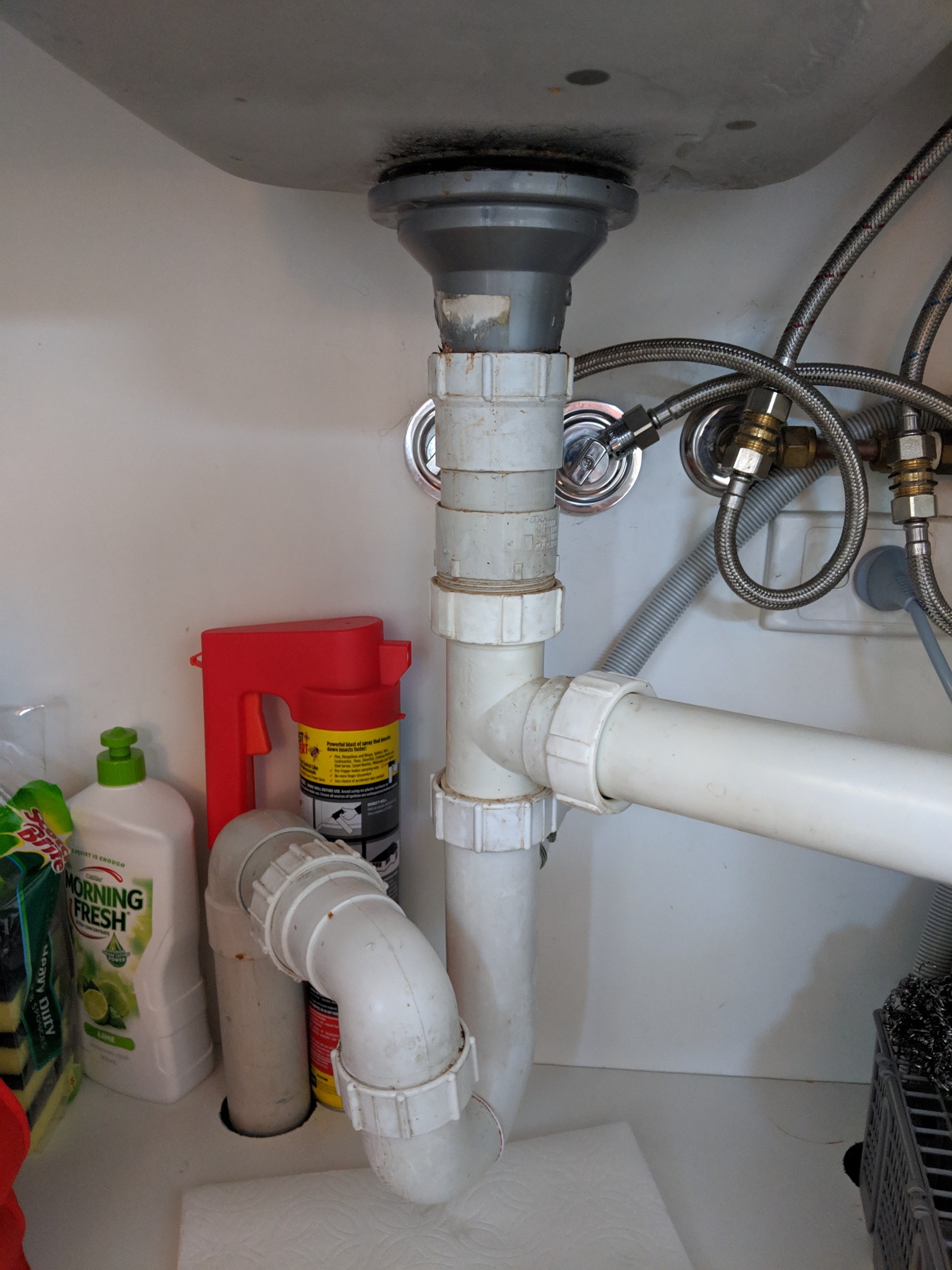
The drain trap helps to keep water flowing smoothly through a sink's pipes and features many connections that often wiggle loose. These connections include various types of screws, bolts, and compression nuts. The trap may also leak if the drain pipes block and put pressure on the pipe, allowing a little waste water to flow past.
Unfortunately, corrosion may also cause some leaks. As a result, repairs on the trap may be a little trickier for some homeowners. Typically, this process requires tightening all of the connecting bolts first and then checking for clogs if the leaks persist. And if signs of corrosion appear around the trap, replacement may be necessary.
Sealing A Leaky Faucet Base Plate (fix It Fast In 4 Steps Or Less!)
Although most homeowners should have little trouble managing these common leak issues, professional help is still a wise choice for managing many of these concerns. So if your sink is leaking and you want to ensure it runs smoothly, please call us at O'Fallon Sewer Service to set up an inspection appointment. Our professionals will work hard to ensure your sink no longer leaks.
Knowing why you have slow or blocked drains can help you avoid similar problems in the future. Use these tips for diagnosing such drainage problems.
Bursting water pipes is a common issue that homeowners face. Here are some common causes of burst pipes and how you can prevent this unpleasant issue.
Why Is My Garbage Disposal Leaking?
Some tree roots invade underground drainage pipes and wreak havoc. Discover how to safeguard your investment and keep your drains flowing freely.
One way to increase value is upgrading the plumbing system. Read on to discover four plumbing ideas to help increase a home's worth before selling.

If you own a home with a septic tank, locating your septic tank can be difficult. Discover five simple ways to locate your septic tank.
Kitchen Sink Water Damage In Los Angeles And Phoenix
As a homeowner, you must learn to detect sump pump issues early. Read this blog to learn about four common sump pump issues to look out for.
If you get the right plumber for your home, you will save money and time. Discover how to find the best plumber for your next project.
Rather than trying to fix plumbing yourself, call qualified professionals to deal with plumbing emergencies. See five plumbing issues best left to experts.
Stop Leaking Pipe Under Your Kitchen Sink (easy How To Guide) ‐ Fixed Today Plumbing
Like any other crucial system in your home, your plumbing system needs proper care. Avoid these common mistakes to ensure your system runs properly.
Plumbing noises can signify a host of different problems. Learn what the most common ones may mean and what a professional plumber can do to help.

Content, including images, displayed on this website is protected by copyright laws. Downloading, republication, retransmission or reproduction of content on this website is strictly prohibited. Terms of Use | Privacy Policyon your cleaning supplies, you might wonder if the garbage disposal, kitchen faucet, or pipes underneath your sink are leaking. With a large leak, this is usually obvious due to the amount of water or signs of corrosion. If it is a small leak, though, it may be hard to tell. There is often water from the leak on many different parts that
Common Causes Of Kitchen Sink Leaking • Proplumber
At Legacy Plumbing, we deal with these sorts of scenarios all the time, so in this article is a systematic approach that you can use to test the plumbing underneath your kitchen sink. Once you find out where the leak is, you can then find out what is involved in getting it fixed.
When diagnosing a difficult leak, it is always helpful to properly prepare the area and establish a baseline. First, take everything out from underneath the sink to give you enough room to look at everything. In order to see behind the sink basin, you will probably need to lay down underneath it in the cabinet. You will then need to get a flashlight and a few dry towels.
Next, take a small, dry dish rag or a couple of paper towels and dry off everything very thoroughly. Dry off the garbage disposal; dry off all of the drain pipes; dry off the shut off valves and faucet/dishwasher supply lines. Use the corner of your rag or paper towel to absorb any water in the nooks and crannies.
Common Causes Of Kitchen Sink Leaks
During this process, you may get more evidence of where the leak is. If the leak is coming from one of the water lines or from up inside the faucet, you may notice a spot where water comes right back as soon as you dry it off. If that is the case, then you found a leak! If not, proceed to the next step.
After everything is dried off, you then want to systematically test the drain pipes. Most kitchen sink leaks are on the drain lines (very frequently on loose or improperly connected

). These won’t show themselves unless you’re running water. Start by running water in both of the sink basins. Let it run for two or three minutes in each basin while carefully checking for leaks with your flashlight and a dry piece of paper towel/tissue paper.
Why Is Under My Kitchen Sink Leaking?
Start at the highest points where the pipes/disposal connect to the sink basin(s). You need to pay close attention in order to catch the leak as soon as it starts happening. If you wait, it may be hard to tell where the water is coming from. Use your hands to
If you didn’t find anything during the regular flow test, it is time for a stress test on the drain pipes! Put a stopper in each basin and fill them up with water. We call this the “basin test”. Once the basins are full, you remove the stoppers and let them both drain at the same time. Run the garbage disposal
The sinks are draining. This puts all of the drain pipes under the most stress they will receive during normal use. Monitor all of these pipes and the garbage disposal
How To Fix A Water Leak In My Kitchen Sink
If you still don’t see anything, next start the dishwasher. Let the dishwasher run for a few minutes – allowing it to fill up with water. Then press the “
” button (each dishwasher has a different way of manually initiating the drain cycle). Your dishwasher will probably drain into the side of your garbage disposal at the top through a black or white pipe. You should hear the water trickling into the disposal. In some setups, the water flows through a device called an “air gap” which is mounted on the countertop next to the faucet. Check this as well.
Haven’t found where the leak is coming

0 Comments
Posting Komentar