This article was co-authored by David Balkan and by staff writer, Christopher M. Osborne, PhD. David Balkan is a Professional Plumber, CEO of Balkan Sewer and Water Main Service, and President of Balkan Sewer and Drain Cleaning. As a hands-on owner of these companies for over 40 years, David is knowledgeable about water service lines, sewers, and drain line issues. David is a Committee Chairman of the Master Plumbers Council and has sat on the Executive Committee of the Sub Surface Plumbers Association of New York for over 30 years. His knowledge and solution-oriented approach contributed to Balkan Sewer and Water Main Service being the largest and most trusted service in New York City and the recipient of the 2017 Angie’s List Super Service Award.
If you hear a “drip, drip” from underneath the kitchen sink when it’s full of dirty dishes and water, there’s a good chance you have a leaky sink drain (often called a sink strainer). The sink strainer is the metal, funnel-shaped contraption that pressure seals to the sink from above and below, and it will eventually either spring a leak or get so scratched and discolored that you’ll want to replace it. Luckily, with the right tools and some elbow grease, you can remove all but the most stubborn rusted-on sink drains yourself — and even install a new one without calling a plumber!
This article was co-authored by David Balkan and by staff writer, Christopher M. Osborne, PhD. David Balkan is a Professional Plumber, CEO of Balkan Sewer and Water Main Service, and President of Balkan Sewer and Drain Cleaning. As a hands-on owner of these companies for over 40 years, David is knowledgeable about water service lines, sewers, and drain line issues. David is a Committee Chairman of the Master Plumbers Council and has sat on the Executive Committee of the Sub Surface Plumbers Association of New York for over 30 years. His knowledge and solution-oriented approach contributed to Balkan Sewer and Water Main Service being the largest and most trusted service in New York City and the recipient of the 2017 Angie’s List Super Service Award. This article has been viewed 219, 680 times.
How To Replace A Sink Trap
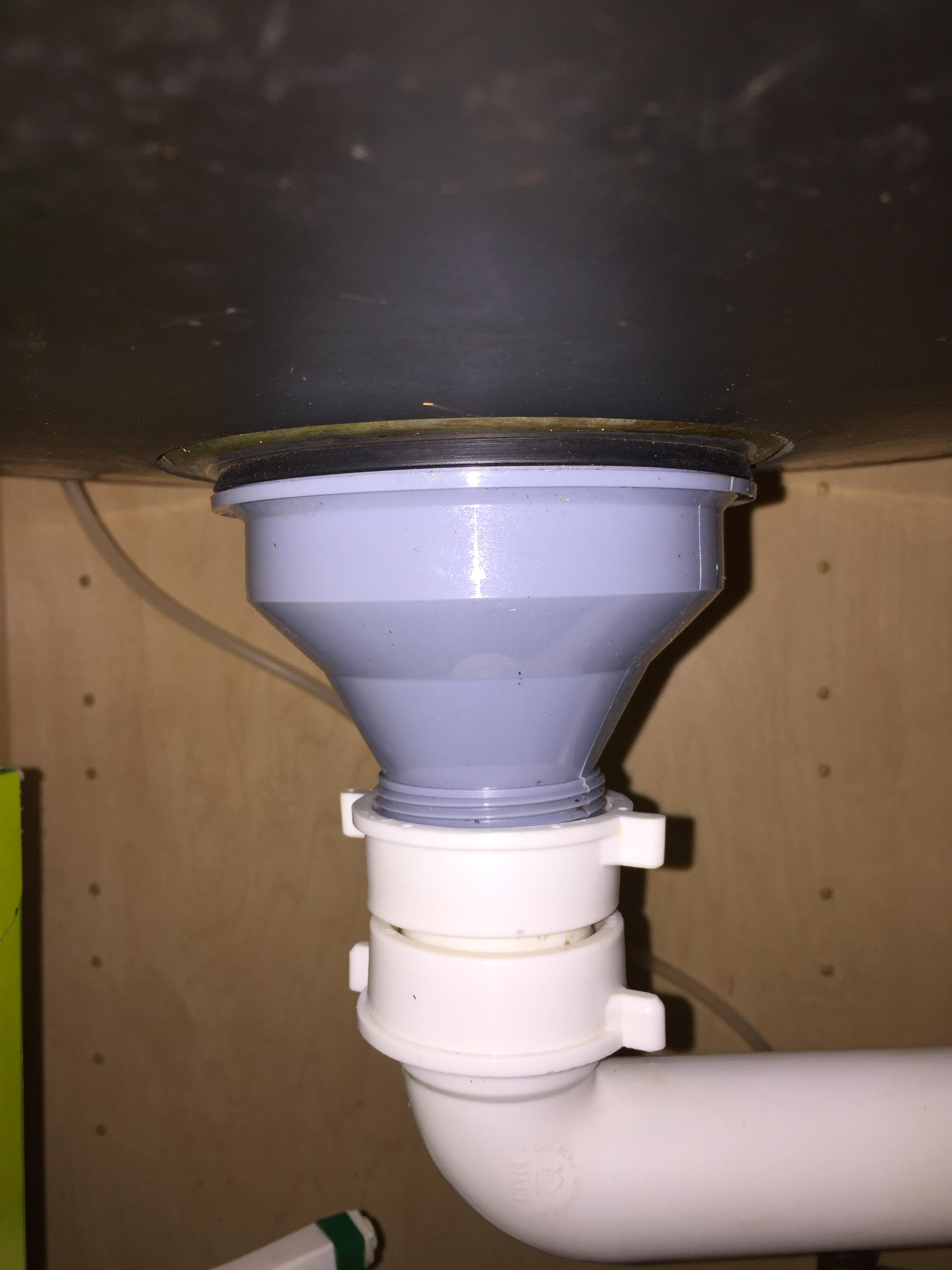
To remove a kitchen sink drain, all you’ll need is a wrench, a screwdriver, and a pair of needle-nosed pliers. The first thing to do is loosen the coupling nut connecting the strainer to the drain pipe, which you can usually do by hand. If the nut is very tight, hold the strainer in place from above with the pliers while you loosen it. If you see screws holding your strainer in place, remove them with the screwdriver before loosening the locknut by hand. For a locknut with no screws, you’ll need to use a wrench to loosen it by turning it counterclockwise. Then, you should be able to wiggle the strainer loose and push it out of the sink. Finish by cleaning any gunk or putty from around the hole where the drain was fitted. For tips on how to install a new kitchen sink drain, read on!Introduction Quick and easy fix for a leaky kitchen sink basket strainer. Replace the basket strainer yourself in just an hour and save the cost of a visit from the plumber.
Fill up the sink with water and touch a facial tissue between the bottom of the kitchen sink drain and the sink. If the tissue picks up any water, you’ve got a leaky basket strainer and it’s time to learn how to remove a sink drain.
Loosen the coupling nut at the base of the kitchen sink strainer basket with a slip-joint pliers and slide the nut completely off the threads. If the basket spins, hold it tight as in this photo.
How To Install A Kitchen Sink Drain
Use 16-in. slip-joint pliers or spud wrench to unscrew the kitchen sink strainer locknut. If the entire basket spins, insert the handles of a pliers into the strainer grate from above and stick a screwdriver between the handles to hold it still. Reach over the front of the sink, or have an assistant hold the screwdriver from above. If you can move the drainpipe out of the way, you can insert the pliers handles up into the strainer grate from the bottom to get a better handle on it yourself.
Roll plumber’s putty between your hands into a rope the size of a pencil and wrap it around the lip of the kitchen sink drain opening. Press the kitchen sink strainer firmly down into the putty, add the rubber gasket, friction ring and locknut under the sink, and retighten the locknut.
If you discover a puddle of water in the cabinet under your sink, it may be caused by a leaky basket strainer. Old plumbing fittings can be tricky to loosen, but we’ll show you how to tear them apart and put them back together without any strain. You can pick up all the necessary supplies at a hardware store or home center.
How To Replace A Laundry Sink Drain Pipe
To be sure the leak is coming from the basket strainer instead of a pipe joint, test the basket for leaks as shown in Photo 1. Once you confirm that the basket strainer is leaking, begin the removal process (Photo 2). Photo 3 shows how to remove the strainer locknut, which holds the basket tight to the sink. If the locknut is rusted in place, spray it with penetrating oil. If you don’t have large enough pliers to get a good grip, loosen the locknut by tapping the locknut with a hammer and an old chisel. (If the locknut won’t move, see the next step, below.) Completely remove the locknut, friction ring and gasket, and lift the old basket out of the sink.
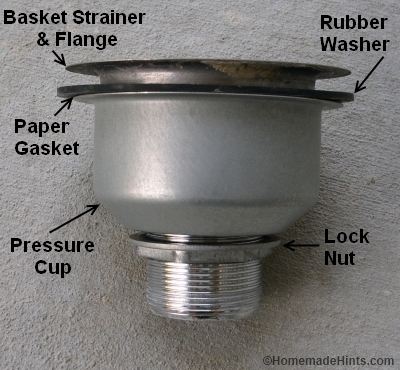
Scrape off the old putty with a plastic putty knife so you don’t scratch the sink. Seal the new basket in the sink with plumber’s putty as shown in Photo 4. Plumber’s putty cannot be used on certain new sinks, but these will be labeled to that effect. If you can’t use plumber’s putty, use a non-water-based silicone. Excess putty will squeeze out between the new basket strainer and the sink when you tighten the locknut in place. Wipe it off with a rag or paper towel. Make sure to insert the cardboard friction ring between the rubber gasket and the locknut so the locknut spins freely, without catching on the gasket.
If all else fails, chuck a metal cutoff wheel into a rotary tool and cut the locknut. Cut until you reach the cardboard ring above the nut. Don’t cut into the sink. If the nut still doesn’t spin, fit your chisel into the cut area and smack it with a hammer to crack it open. Wear eye protection.
How To Change A Kitchen Sink Drain: In Four Easy Steps |
You have to spend at least $50 to get a high-quality kitchen sink basket strainer assembly with a durable finish and a reliable stopper mechanism. The best strainers have either a spin-lock or a twist-and-drop style stopper. The spin-lock stopper doesn’t have any parts that can wear, but screwing it in and out can be annoying. The twist-and-drop style is much easier to use but requires occasional O-ring replacement.
Avoid push-in style strainers that have a nonreplaceable neoprene stopper or a plastic knob. The plastic parts break and can lose their sealing ability if exposed to boiling water.

We are no longer supporting IE (Internet Explorer) as we strive to provide site experiences for browsers that support new web standards and security practices.Removing a sink flange to replace or repair it is a reasonably straightforward DIY task that you can accomplish without any expertise. However, residue and rust buildup can often turn an easy plumbing job into a frustrating experience.
How Do I Remove Kitchen Taps Like This And Replace With A Mixer ? Thanks Any Help Appreciated
Fortunately, there are some simple ways to remove a sink flange, even if it's firmly stuck in the assembly. Use these step-by-step instructions to remove a sink drain flange.
Before you begin, empty everything from underneath the sink and place a cushion or two on the floor for comfort. It's also worth switching off the water supply to the faucet so that you don't get a nasty surprise if someone turns the tap on while you're working under the sink.
The coupling nut is a large ring-shaped nut that joins the flange basket to the drain pipe. Grasp it firmly with a set of slip-joint pliers and twist it to the left to loosen it. If it doesn't budge, try turning it in the opposite direction. Doing this can break any residue or rust that's jamming the nut, letting you unscrew it more easily. Loosen it until you can remove it from the threads.

So Easy To Install The Sink Strainer With One Illustration
Using your slip-joint pliers, twist the locknut between the flange assembly and the bottom of the sink to remove it. If the flange is rusty or caked with residue, this may cause it to spin.
Allowing the flange to spin while you loosen the locknut could lead to damage, so it's important to hold it still while you work. You can do this by inserting the handles of a pair of pliers into two of the holes in the drain basket. Place a screwdriver

0 Comments
Posting Komentar